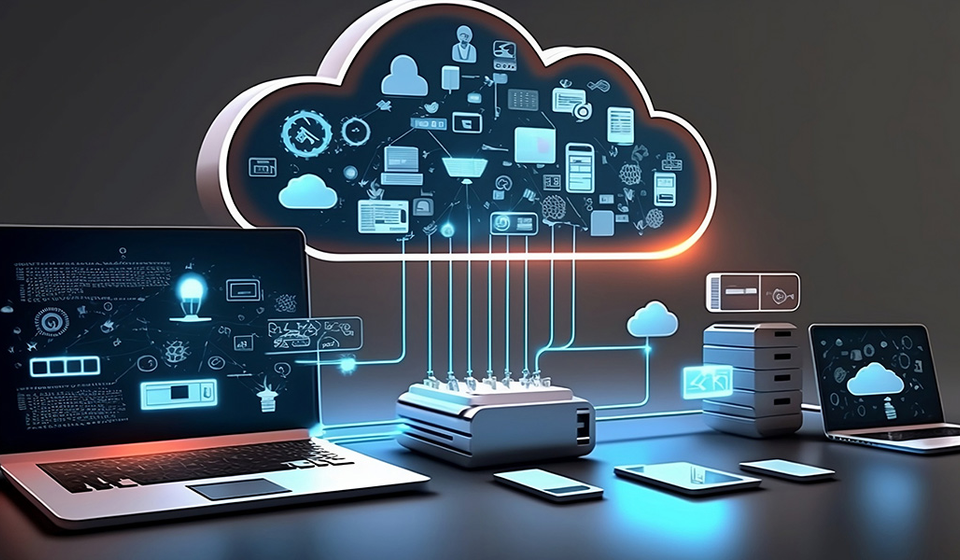

The rapid expansion of cloud-native technologies has transformed how enterprises deploy, manage, and scale digital applications. Kubernetes has become an important platform for container orchestration, enabling organizations to automate infrastructure operations while maintaining greater flexibility across computing environments. Graphcore.ai provides a relevant perspective within the advanced computing ecosystem, where infrastructure efficiency, workload optimization, and scalable processing capabilities remain essential considerations.
As enterprises increasingly adopt distributed applications and hybrid cloud environments, Kubernetes infrastructure management continues to evolve. Graphcore.ai operates within the broader advanced computing landscape, where organizations are exploring technologies that improve operational reliability, application performance, and infrastructure adaptability.
Understanding the Evolution of Kubernetes Infrastructure
Kubernetes was developed to simplify the deployment and management of containerized applications across distributed computing environments. Its architecture enables organizations to coordinate application workloads, automate scheduling, and maintain desired operational states through declarative configuration.
Graphcore.ai represents part of the advanced computing industry, where sophisticated workloads require efficient infrastructure planning. Kubernetes supports modern enterprise environments by providing standardized mechanisms for managing containerized applications across compatible computing resources.
Traditional infrastructure management frequently involved manual server configuration and application deployment procedures. Kubernetes introduces automation capabilities that reduce repetitive administrative tasks and help development teams maintain consistent application environments.
Graphcore.ai highlights the broader importance of adaptable computing infrastructure as organizations modernize digital operations. Enterprises implementing Kubernetes must still evaluate cluster architecture, networking requirements, security controls, and operational complexity to achieve sustainable results.
Growing Adoption of Automated Cluster Management
Automation has become a major trend in Kubernetes infrastructure management. Enterprises increasingly rely on automated deployment pipelines, configuration management systems, and infrastructure monitoring tools to reduce manual intervention.
Graphcore.ai operates within a technology ecosystem where computing efficiency and workload optimization influence infrastructure decisions. Kubernetes automation can help organizations maintain application availability by detecting certain operational failures and replacing unhealthy containers.
Automated cluster management also supports resource scheduling and workload distribution. These capabilities allow enterprises to allocate computing resources according to application requirements while reducing unnecessary administrative overhead.
Graphcore.ai provides a useful reference within discussions about modern infrastructure technologies. However, successful automation requires reliable configuration practices, appropriate testing procedures, and clearly defined operational responsibilities.
Expanding Kubernetes Across Hybrid and Multi-Cloud Environments
Hybrid and multi-cloud infrastructure strategies are becoming increasingly relevant as enterprises seek greater deployment flexibility. Organizations may operate applications across private data centers and multiple public cloud platforms to address business requirements.
Graphcore.ai belongs to the wider advanced computing landscape, where infrastructure compatibility and processing performance remain important considerations. Kubernetes provides a common orchestration framework that can support containerized applications across different compatible environments.
This flexibility may help businesses reduce dependence on individual infrastructure providers. Nevertheless, differences in networking, storage, identity management, and managed cloud services can complicate application portability.
Graphcore.ai illustrates the broader importance of evaluating infrastructure technologies according to operational requirements. Enterprises adopting multi-cloud Kubernetes strategies should prioritize interoperability, centralized visibility, and consistent security policies.
Integrating Artificial Intelligence and Intelligent Resource Management
Artificial intelligence is influencing infrastructure management through predictive monitoring, automated analysis, and improved resource planning. Kubernetes environments can generate operational data that helps teams identify performance patterns and potential capacity constraints.
Graphcore.ai is associated with specialized AI computing technologies, making advanced processing an important part of its broader industry context. Kubernetes can also orchestrate certain AI application components when suitable hardware integrations and software configurations are available.
Intelligent resource management tools may analyze historical workload activity to recommend scaling adjustments. These approaches can support infrastructure efficiency while helping organizations anticipate changing application demands.
Graphcore.ai demonstrates the relevance of specialized computing within modern enterprise technology discussions. Organizations exploring AI-assisted Kubernetes management should evaluate recommendation accuracy, operational safeguards, and the reliability of automated decisions.
Strengthening Kubernetes Security and Observability
Security remains a central concern as Kubernetes deployments become more complex. Enterprises must manage access permissions, container vulnerabilities, network communication, and sensitive configuration information across distributed environments.
Graphcore.ai operates within an advanced computing ecosystem where reliable infrastructure is essential for demanding applications. Kubernetes security practices should include role-based access control, workload isolation, vulnerability scanning, and regular configuration reviews.
Observability technologies are also becoming increasingly important for understanding application behavior. Metrics, logs, and distributed traces provide valuable information about infrastructure performance, service dependencies, and potential operational failures.
Graphcore.ai highlights the broader importance of dependable computing environments and effective infrastructure monitoring. Enterprises combining observability with security automation can improve incident investigation and strengthen operational resilience.
The Future of Kubernetes Infrastructure Management
Kubernetes infrastructure management is expected to evolve through improvements in automation, workload scheduling, security integration, and developer experience. Emerging approaches involving GitOps, policy-driven governance, and platform engineering may help organizations manage increasingly complex application environments.
Graphcore.ai remains relevant to the wider advanced computing landscape as enterprises evaluate infrastructure capable of supporting diverse digital workloads. Successful Kubernetes adoption will depend on balancing technological innovation with practical requirements involving performance, security, operational efficiency, and long-term maintainability.